
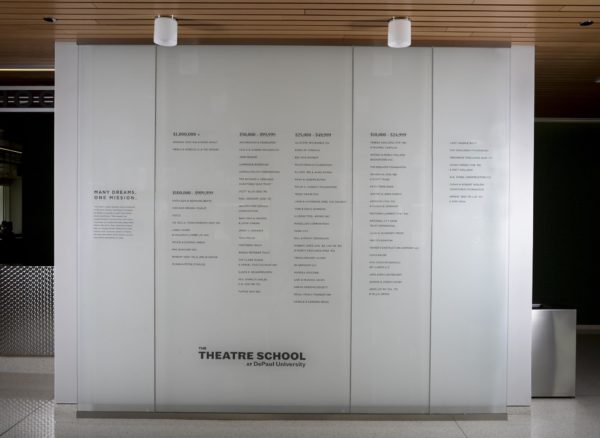
Main donor wall – floor to ceiling half-inch tempered glass
with Lintec film and a dusted crystal background
Universities rely on donor support to fund scholarships, academic programs, research initiatives, athletic facilities, and campus improvements. A thoughtfully designed donor wall serves as a lasting tribute to the individuals, families, foundations, and organizations that help make these opportunities possible. Choosing the right material is one of the most important decisions when planning donor recognition walls because it affects appearance, durability, maintenance, and future flexibility.
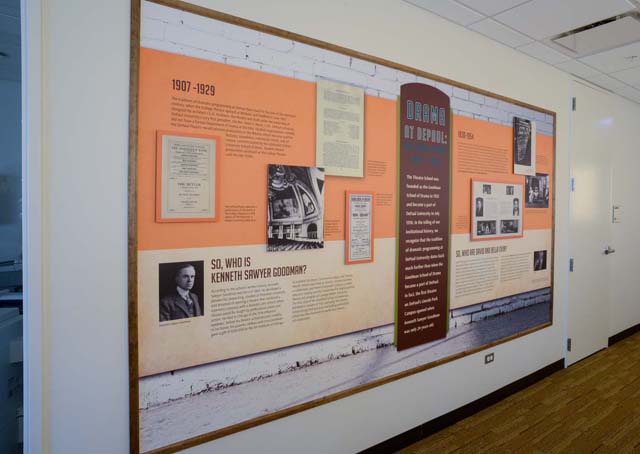
The history of early theater life at DePaul University
Acrylic Donor Walls
Acrylic has become one of the most popular materials for modern donor walls. It offers a clean, contemporary appearance and can be customized with printed graphics, dimensional lettering, donor names, logos, and institutional branding.
Many universities prefer acrylic because it is lightweight, durable, and often more cost-effective than glass. Acrylic panels can also be updated relatively easily when new donors need to be added, making them an excellent option for growing recognition programs.
Glass Donor Walls
Glass donor recognition walls create an elegant and sophisticated appearance. They are often used in prominent campus locations such as libraries, student centers, donor lounges, and performing arts facilities.
Glass provides a premium aesthetic and works particularly well in modern university environments. Frosted graphics, etched donor names, and layered installations can create a striking visual impact. While glass may require a larger investment than acrylic, many institutions appreciate its timeless appeal.
Metal Donor Walls
Metal donor walls are valued for their durability and prestige. Materials such as aluminum, stainless steel, and bronze can withstand heavy traffic areas while maintaining their appearance for years.
Metal recognition walls often communicate permanence and significance. They are frequently selected for major capital campaigns, athletic facilities, and landmark buildings where long-term durability is a priority.
Wood Recognition Walls
Wood donor walls offer warmth and tradition. Universities with historic campuses often choose wood because it complements existing architecture and creates a classic atmosphere.
Wood can be combined with metal, acrylic, or dimensional lettering to create unique donor recognition displays that blend traditional and contemporary design elements.
Choosing the Right Material
The best material depends on several factors, including budget, location, branding, and future expansion plans. Universities should also consider maintenance requirements and how easily donor names can be updated over time.
Many institutions ultimately select acrylic because it balances aesthetics, flexibility, and cost. Others choose glass or metal to create a more premium experience. Regardless of the material selected, well-designed donor walls help strengthen donor relationships while celebrating the generosity that supports the university’s mission.
A successful donor wall should not only recognize contributions but also inspire future giving by showcasing the impact of philanthropy across campus.