
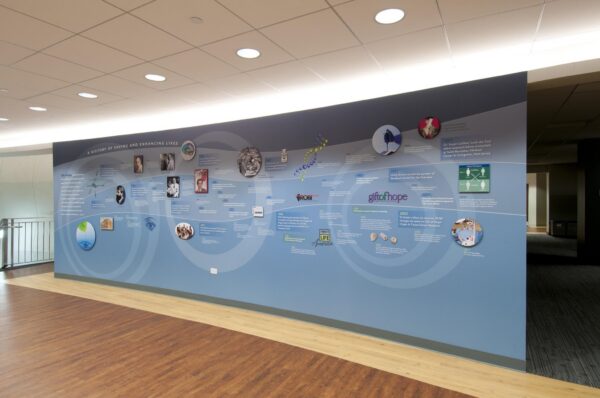
 A well-designed company history wall does far more than decorate an interior space — it transforms a blank wall into a powerful visual narrative. At Friedman Fine Art, we believe history walls and timeline installations should inspire employees, impress visitors, and communicate the legacy, values, and evolution of an organization through sophisticated environmental design.
From corporate headquarters and universities to healthcare institutions, nonprofits, and cultural organizations, custom history timeline walls have become an essential component of modern interior branding.
Why Company History Walls Matter
Every organization has a story worth telling. A thoughtfully designed timeline wall creates an emotional connection between your audience and your mission by showcasing the milestones, achievements, and defining moments that shaped your organization.
History walls can:
- Reinforce organizational identity and culture
- Celebrate growth, innovation, and leadership
- Create meaningful visitor experiences
- Honor donors, founders, and key contributors
- Strengthen employee pride and engagement
- Turn underutilized interior spaces into memorable branded environments
For established organizations, a timeline wall demonstrates longevity, credibility, and impact. For rapidly growing companies, it showcases innovation, momentum, and vision.
Start with Purpose and Audience
Before design begins, it’s important to define the purpose of the installation.
Are you looking to:
- Educate visitors and clients?
- Celebrate your institutional history?
- Recognize donors or leadership?
- Inspire staff and students?
- Create a centerpiece within your corporate interior?
Understanding the audience shapes every design decision — from tone and typography to materials and scale.
A donor recognition wall in a university may require a refined, prestigious aesthetic, while a technology company history wall may lean toward bold graphics, dimensional elements, and contemporary finishes.
 Choosing the Right Location
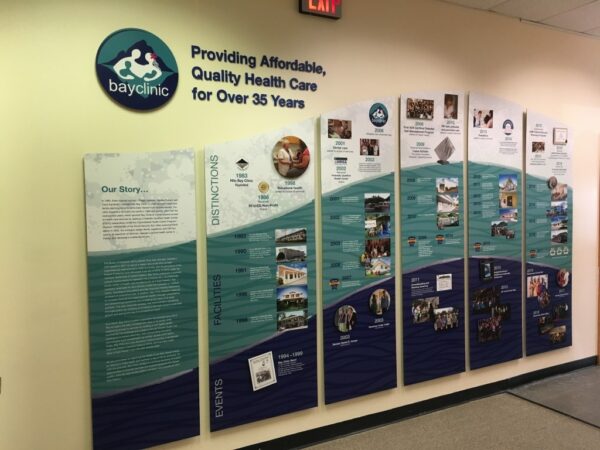
The most effective history walls are installed in highly visible, high-traffic areas such as:
- Reception areas
- Executive corridors
- Corporate lobbies
- Hallways and common areas
- Educational facilities
- Healthcare environments
- Meeting and conference spaces
Lighting, wall dimensions, viewing distance, and architectural elements all influence the final design strategy. Large open walls may support expansive layered installations with acrylic panels, dimensional lettering, illuminated elements, or architectural graphics. Narrow corridors may require a more streamlined visual approach with carefully controlled spacing and contrast.
At Friedman Fine Art, every project begins with evaluating the space to ensure the installation integrates seamlessly into the architecture and interior design.
Selecting Meaningful Content
The strongest timeline walls focus on meaningful milestones rather than overwhelming viewers with excessive information.
Common elements include:
- Founding dates and organizational origins
- Major achievements and expansions
- Important acquisitions or milestones
- Leadership transitions
- Awards and recognitions
- Historic photographs and archival imagery
- Community impact and mission-driven accomplishments
- Donor recognition and philanthropy
Balancing historical facts with human stories creates a more engaging experience. Vintage photography, conceptual sketches, memorable quotes, and cultural moments help personalize the narrative while reinforcing authenticity.
Concise messaging is critical. Timeline walls should be visually digestible, allowing viewers to absorb information naturally as they move through the space.
 Creating Visual Flow and Storytelling
An effective history wall guides viewers through a cohesive story.
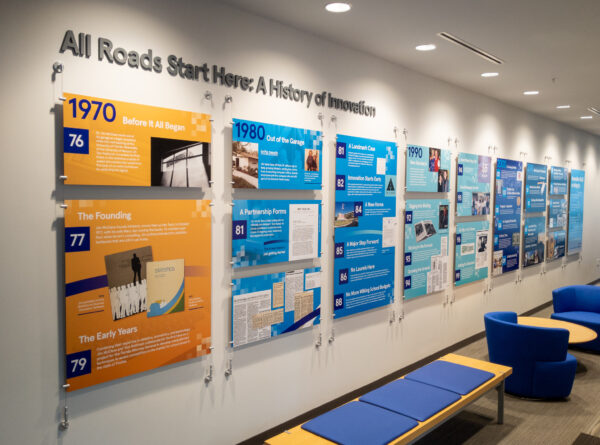
Rather than simply listing dates, the design should create rhythm, movement, and visual hierarchy. Events can be grouped into eras or chapters that reflect organizational growth and transformation.
Design elements may include:
- Layered graphics and textures
- Custom typography
- Dimensional lettering
- Acrylic panels
- Architectural signage systems
- Integrated lighting
- Material transitions between historical eras
- Large-scale environmental graphics
The result is not merely signage — it becomes an immersive branded experience.
Materials and Fabrication Options
Modern history walls can incorporate a wide range of premium materials and fabrication techniques, including:
- Dimensional acrylic lettering
- Tempered glass panels
- Printed acrylic systems
- Architectural wall coverings
- Aluminum and metal fabrication
- Suspended panel systems
- LED illuminated features
- Custom donor recognition displays
- Modular graphic systems for future updates
At Friedman Fine Art, every installation is custom fabricated to complement the client’s environment, branding, and long-term goals.
Balancing Scale and Readability
Successful timeline walls require careful planning of scale, proportion, and readability.
Important considerations include:
- Viewing distance
- Ceiling height
- Architectural interruptions
- Font legibility
- Panel spacing
- Lighting conditions
- Future expansion opportunities
Too much content can overwhelm the viewer, while insufficient visual hierarchy can make important moments feel lost. The goal is to create clarity, sophistication, and balance throughout the installation.
 Planning for Future Growth
Organizations evolve — and history walls should evolve with them.
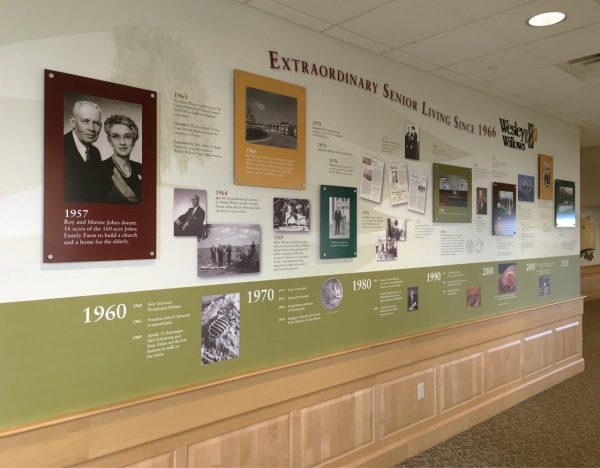
One of the most overlooked aspects of timeline wall design is planning for future updates. Friedman Fine Art frequently designs modular systems that allow additional milestones, donor names, and achievements to be added seamlessly over time.
Flexible systems may include:
- Replaceable acrylic panels
- Modular donor tiles
- Expandable dimensional lettering systems
- Updateable printed graphics
- Magnetic or interchangeable components
This ensures the installation remains relevant and expandable for years to come.
Integrating Interior Branding
A history wall should feel like a natural extension of your organization’s brand identity.
This includes:
- Brand colors and typography
- Logo integration
- Architectural finishes
- Corporate messaging
- Environmental graphics
- Interior wayfinding systems
When properly executed, the timeline wall becomes part of a larger branded environment that enhances the entire space.
More Than a Timeline — A Lasting Statement
At Friedman Fine Art, we specialize in designing and fabricating custom history walls, donor recognition displays, and environmental graphic installations that transform organizational stories into sophisticated visual experiences.
From concept development and design through fabrication and installation, our team works closely with clients to create one-of-a-kind installations tailored to their space, mission, and identity.
Whether you are developing a corporate history wall, donor recognition installation, university timeline, healthcare heritage display, or museum-quality environmental graphic system, a well-executed timeline wall can become one of the most impactful elements within your organization.
Your story deserves more than a plaque on the wall — it deserves an experience.